
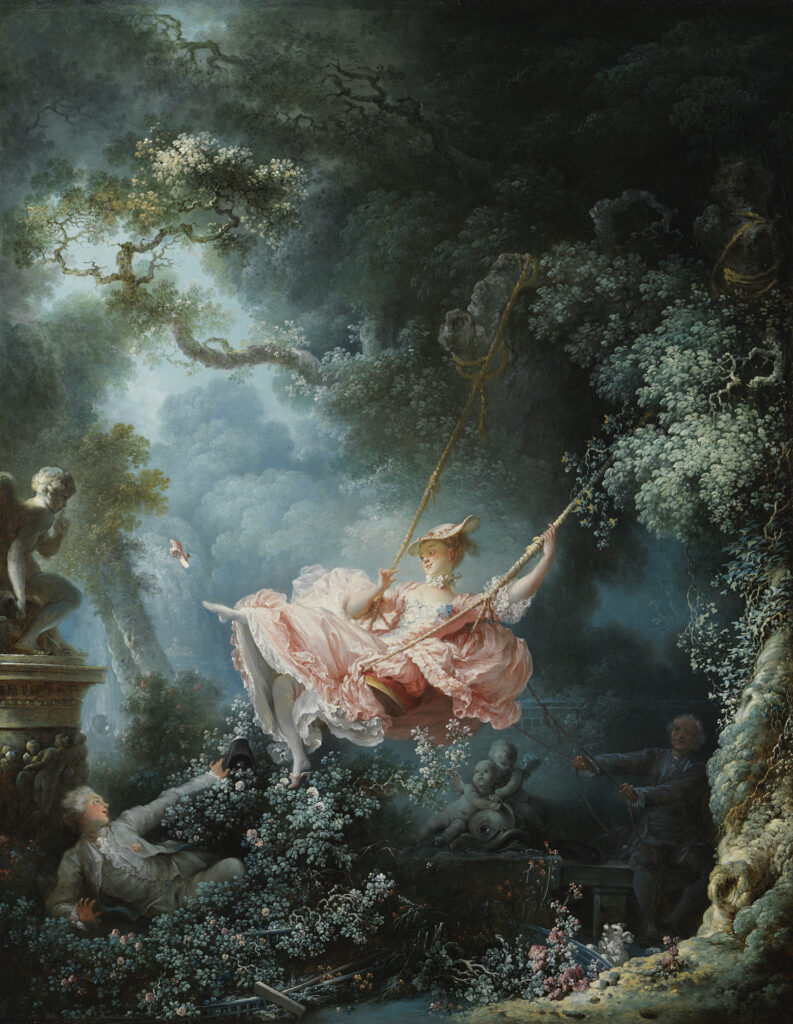
Jean-Honoré Fragonard’s The Swing (1767) is one of the most iconic works of the Rococo period. Encapsulating the spirit of playful decadence and sensuality that defined the era. The painting depicts a young woman, dressed in an extravagant, flowing pink gown. Seated on a swing suspended by ropes tied to a tree branch. She is mid-swing, her body leaning back in a carefree posture, as her shoe flies off into the air. The lush, overgrown garden setting envelops her with a sense of intimacy and seclusion. While the scene’s dynamic energy and theatrical composition highlight Fragonard’s mastery of storytelling through visual art.
Art Analysis
The central figure of the woman radiates femininity and youthful vitality. Her voluminous dress, rendered in delicate pinks with soft highlights, dominates the composition, creating a striking focal point. The folds and textures of the fabric is meticulously painted, emphasizing its opulence and the aristocratic privilege it represents. Her playful demeanor is matched by the coquettish act of kicking off her shoe. A symbolic gesture often interpreted as a representation of sensual liberation and erotic flirtation. Below her, in the bottom left corner, a hidden male admirer reclines in the shadows. Gazing upward with a mixture of adoration and longing. His secretive position, half-concealed by foliage. Underscores the theme of illicit love and the thrill of voyeurism, a recurrent motif in Rococo art.
Adding to the complexity of the scene is the older man in the background, pulling the ropes of the swing. Often interpreted as a hapless husband or an oblivious chaperone. His presence contrasts sharply with the clandestine intimacy shared between the woman and her admirer. This triangular dynamic imbues the painting with a subtle narrative tension. Reflecting themes of deception and the hidden games of desire within the aristocratic world. The inclusion of classical motifs, such as the statue of Cupid to the left with a finger raised to his lips, reinforces the secretive and romantic undertones of the composition.
Analysis part 2
Fragonard’s art treatment of the surrounding landscape contributes significantly to the painting’s atmosphere. The garden, teeming with overgrown vegetation, flowers, and twisting tree branches, evokes an idyllic, almost otherworldly setting. The interplay of dappled light and shadow across the scene enhances its depth and vibrancy. Creating a sense of movement and life that mirrors the swing’s motion. The use of a soft, pastel color palette—predominantly greens, pinks, and golds—lends the work a dreamlike quality. While the loose, fluid brushstrokes embody the Rococo style’s preference for lightness and whimsy.
Symbolically, The Swing serves as a reflection of the decadence and moral ambiguity of the French aristocracy. In the decades preceding the Revolution. The art playful tone masks deeper commentary on the themes of excess, desire, and the transience of pleasure. The lush garden, with its unruly and almost fantastical character. I see it as a metaphor for the untamed and indulgent nature of human passions. Similarly, the precariousness of the swing itself, suspended in mid-air. Hints at the fleeting nature of the pleasures and privileges enjoyed by the elite.
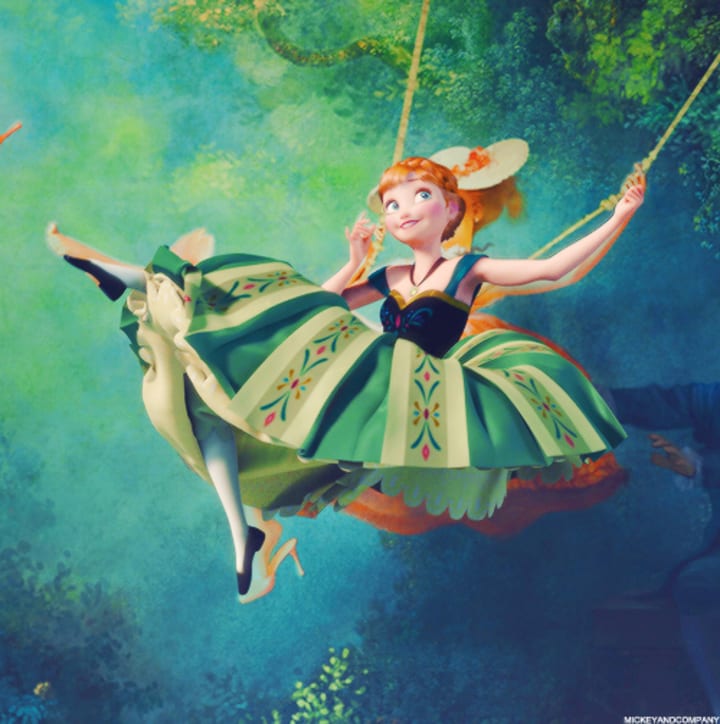
The movies that got inspired by the painting:
- Tangled (2010)
- Frozen (2013)
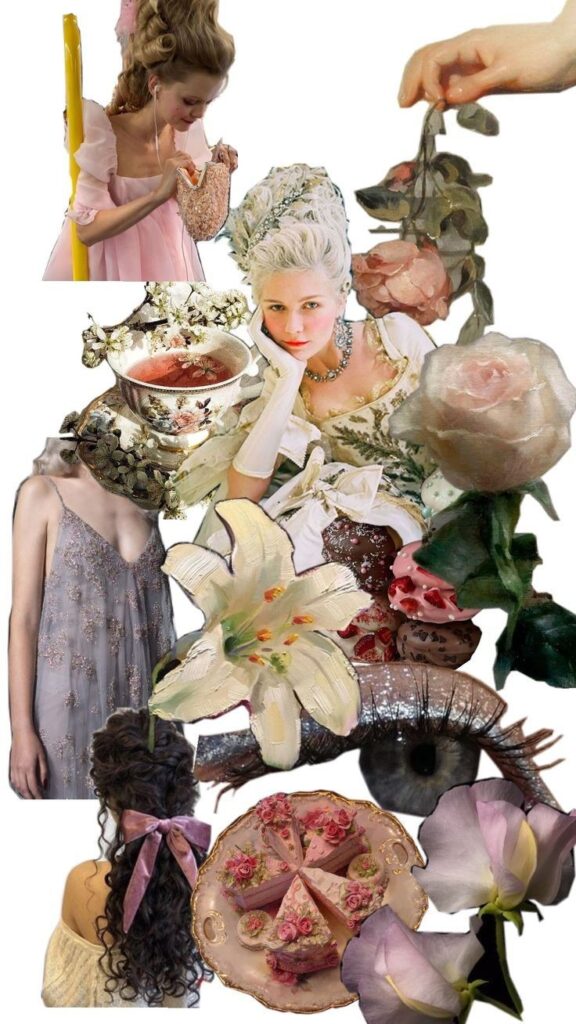
Mood board by me:
Author

konrad.zach@gmail.com